
Reviewed · HISTORICAL TOURS
St Andrews Old Course History Tour, for the Golfer
Fairway history starts right away. On this St Andrews Old Course history tour, I love that you get Old Course fairway access plus story-filled golf history from Richard, a retired caddie guide. You’ll also end with included, pro-taken Swilcan Bridge photos on the iconic footbridge. One caution: you need a strong command of English, because slowing down or translating doesn’t work if you miss details.
This is a short, focused walking tour that hits the key sites fast, with a small group size and frequent stops. If you want the Old Course myth to turn into real context, this is the kind of tour that helps you see more than you walked to.
In This Review
- Key things I’d plan around
- Your 75-minute Old Course story walk, built for golfers and first-timers
- Stop 1 at Hotel du Vin St Andrews: the town and the Links charter
- Stop 2 at The Links: where golf started and why St Andrews matters
- Stop 3 at the Royal and Ancient: Old Course changes that shaped the game
- Stop 4 on Grannie Clark’s Wynd: Open Championship and hole-count history
- Stop 5 at Rusacks St Andrews: the 1st and 18th story, tees, and the putting green twist
- Stop 6 on Swilcan Bridge: iconic photos, but plan around tournament days
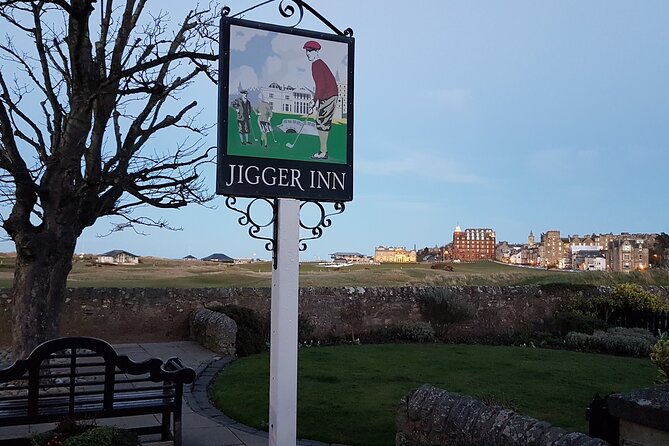
- Stop 7 at the Jigger Inn: Road Hole jaw-droppers and a drink break
- Price and value: why 25 dollars can actually feel like a bargain
- Who this tour suits best (and who should look elsewhere)
- Should you book this Old Course history tour?
- FAQ
- How long is the St Andrews Old Course history tour?
- How much does the tour cost?
- Is the tour in English?
- Where do I meet and where does the tour end?
- Are Swilcan Bridge photos included?
- Can I walk across the Old Course fairway on this tour?
- What group size is this tour limited to?
- Is this tour suitable for young children?
- What kind of walking or mobility level does the tour require?
Key things I’d plan around
- Old Course fairway walking time gives you a rare feel for the course.
- Richard’s caddie perspective ties the legends to what golf actually looks like today.
- Royal and Ancient and course-shaping stories explain why the course layout matters.
- Swilcan Bridge photo shoot is included, but not on tournament days.
- Small group size (max 15) means you get more attention when you do ask questions.
- Runs about 1 hour 15 minutes, so it fits well early in your St Andrews days.
Your 75-minute Old Course story walk, built for golfers and first-timers
If the Old Course is on your list, this tour is a smart way to get there without feeling lost. You’ll walk a tight route through the St Andrews golf world, then stop at the spots that explain why golf became golf right here. The big win is the mix of town history and course history, plus the fact that you’re not just standing and taking photos, you’re learning while you move.
The guide, Richard, is a retired caddie from the Old Course. That matters. A caddie lives with details. He can point out what people get wrong about the game, and he can connect older golf traditions to the modern shape of the course. Several people in the group found it enjoyable even if they don’t play much golf, mainly because the stories are human, not just technical.
You also get a real “walk the course” moment, including a rare chance to cross the Old Course fairway during the tour. That small slice makes the whole experience feel different from a standard sightseeing stroll.
More History Tours in St Andrews:
- St Andrews Tours: Town, Golf and Old Course History
★ 5.0 · 138 reviews - St Andrews, Fife Coast Walk & Historic Abbey Tour from Edinburgh
★ 5.0 · 62 reviews - Tour of St Andrews and Historic Fife Small Group Tour
★ 4.0 · 9 reviews
Stop 1 at Hotel du Vin St Andrews: the town and the Links charter
You meet Richard outside the front of Hotel du Vin St Andrews at 40 The Scores. The start matters here. These public tours do not wait if you’re late, so I’d arrive with a buffer, especially in cool or windy weather.
Right away, the tour sets the scene. You’ll get an overview of St Andrews town history, including the 1123 Links charter connection. This isn’t just trivia for trivia’s sake. It gives you context for why St Andrews became a golf home long before “golf” was a packaged sport brand. Once you understand the timeline, later stops about course evolution make more sense.
A practical note: this first segment is short, about five minutes, so you’ll want to pay attention early. If you drift, you’ll miss the thread that pulls the rest of the tour together.
Stop 2 at The Links: where golf started and why St Andrews matters
Next you’re at The Links, the setting that shaped the early game. This part is focused on origins. You’ll hear the story moving from a 13th-century stick-and-ball game in the Low Countries, onward to Edinburgh in 1744, and then why St Andrews became the center point people still talk about.
I like this stop because it reframes golf as an evolving game, not a fixed tradition. You see the Old Course not as a museum, but as something that developed over time as the sport grew up around it.
You also learn to read the course environment differently. Links golf is tied to place, weather, and how the game is played. Even if you’re not a deep rules person, this stop helps you look at the course grounds with the right mental lens.
Stop 3 at the Royal and Ancient: Old Course changes that shaped the game
Then you head to the Royal and Ancient Golf Club of St. Andrews. Here the tour shifts from “where golf began” to “how the Old Course changed golf.”
You’ll hear how development at the Old Course also shaped the wider game, with talk about where fairways and bunkers come from. This stop also brings in Old Course character, including Old Tom and the old Caddie Shack.
What I find valuable is how the guide makes the course design feel logical. It’s easy to treat bunkers as random hazards until someone explains why they are where they are and what they were meant to do. Same with the general shape of fairways. You start to understand that Old Course design decisions influenced how golfers think and how the sport adapted.
One drawback to keep in mind from the real world: on a walking tour, your ability to hear the guide depends on where you’re standing. One person had trouble at the beginning when the guide’s head was turned away, and it took a moment for hearing to catch up. If you’re sensitive to sound, try to position yourself so you can face him when he talks.
A different kind of day out in Scotland:
- St Andrews & the Fishing Villages of Fife Small-Group Day Tour from Edinburgh
★ 4.5 · 1,973 reviews - St Andrews Must-Sees Daily Walking Tour (11am & 2pm)
★ 5.0 · 478 reviews - Edinburgh: St Andrews & The Fishing Villages of Fife
★ 4.5 · 431 reviews - Private St. Andrews: Home of Golf Old Course Walking Tour
★ 5.0 · 69 reviews
Stop 4 on Grannie Clark’s Wynd: Open Championship and hole-count history
Now you’re at Grannie Clark’s Wynd, a stop that pulls in big event history and the practical evolution of the course layout.
You’ll hear about the Open Championship and the Dunhill Cup, and you’ll also get course development context, including how the hole count moved from 12 and 10 toward the modern 18. The tour also points out important sites around the 18th, which helps if you’re planning to later walk the Old Course on your own.
This stop is a good example of why this tour works for both golfers and non-golfers. Even if you don’t know the Road Hole or the 1st tee yet, you get the idea that the Old Course you see today is the result of many adjustments, not one neat design “finished forever.”
You’ll also feel the tour’s pacing here. This stop runs about 15 minutes, so it’s long enough for real story beats, but short enough that the tour doesn’t drag.
Stop 5 at Rusacks St Andrews: the 1st and 18th story, tees, and the putting green twist
At Rusacks St Andrews, you’ll hear one of the more fun and specific Old Course origin stories: the relationship between early caddies, ladies, and Old Tom, and how that led to the world’s first putting green. That’s the kind of detail that makes the Old Course feel like a living place with quirky decisions, not a sacred object.
You’ll also cover:
- the 1st/18th fairway area
- the Mannings
- the original 1st tee and the 18th hole
- and the working-life feel, including farmers in the area
I like this stop because it connects golf to everyday St Andrews life. Golf didn’t grow in isolation. People lived beside it, worked beside it, and improvised around it as the sport became more formal.
This is also one of the parts where a lot of people get their camera out. If the bridge and the course are the “big ticket” moments, Rusacks is the “wait, that’s where that started” moment.
Stop 6 on Swilcan Bridge: iconic photos, but plan around tournament days
Next comes the most photographed setting in golf history. You stop at Swilcan Bridge for a photo shoot on one of the game’s best-known landmarks.
Here’s the value detail: professionally taken photos on Swilcan Bridge are included in the tour price. That’s not just a nice add-on, it saves you the stress of lining up shots, especially if the crowd is thick or you just don’t want to wrestle with your phone in cold wind.
There is one real consideration. The photo shoot excludes tournament days, like the Dunhill and Open when the area is under different operational rules. If your trip overlaps those events, you might still see Swilcan Bridge, but the included photo moment may not work the same way.
Also, this is a stop where you’ll likely want to take your own photos too. The included photos are great, but it’s nice to have your personal angles, especially if you care about getting the bridge and the course in one frame.
Stop 7 at the Jigger Inn: Road Hole jaw-droppers and a drink break
The tour wraps near the Old Course Jigger Inn at The Jigger Inn. This is where you hear some of the jaw-dropping Old Course moments tied to the Road Hole, the 17th green, one of the most talked-about holes in the sport.
The guide’s job here is to land the stories in the exact places you’re standing near. When it works, the Road Hole doesn’t sound like hype. It sounds like a real hole you can picture and understand.
Then you get time to relax with refreshments. The drinks and food are not included, so I’d plan for a stop after. This is a practical end point because you’re close to the action, and you can decompress before you continue exploring St Andrews.
One more practical point: there’s nowhere on the route to stash items like golf clubs, strollers, or mobility gear. If you’re bringing golf clubs, plan how you’ll carry them. Think small pack, or decide how you’ll manage it between stops.
Price and value: why 25 dollars can actually feel like a bargain
At about $25.00 per person for roughly 1 hour 15 minutes, this tour is priced like a short, guided walk. The reason it can feel like real value is what you’re getting for that time.
You’re getting:
- a professional local guide, Richard
- multiple major Old Course and St Andrews sites
- admission ticket access noted as free at each stop
- and included, professionally taken Swilcan Bridge photos (when the tour plan allows)
That photo inclusion alone can make the difference for a lot of people. It also reduces the hassle factor, which is underrated on trips. When you’re cold, tired, and trying to coordinate group shots, value becomes more than dollars.
Small group size matters too. The tour caps at 15 travelers, which usually means the guide can keep an eye on the group, answer questions, and manage the flow without losing you in the shuffle.
Finally, these tours are booked fairly far ahead, with an average booking window of about 61 days. If this is a must-do for your trip dates, don’t leave it to the last minute.
Who this tour suits best (and who should look elsewhere)
This tour is best if you want golf history that connects to real places. If you play golf, you’ll love the way the guide ties course features, bunkers, and fairway evolution to what you see. If you don’t play much, you can still enjoy it because the guide uses storytelling and course-character details that don’t require technical knowledge.
It is also designed for a modest walking level. The tour runs about 75 minutes and is on foot through town spots and around the key sites. It is not suitable for strollers or carriages, and it is not for people who use crutches, walking frames, mobility scooters, or who have recent knee or hip replacements. If you’re unsure, check your comfort with short, steady walking and uneven surfaces.
One important requirement you should not skip: fluent English is essential. Speaking slowly or translating does not work. If English is not your comfort zone, you might find it tough to keep up with the pace.
Service animals are allowed, and the start area is near public transportation, which helps if you’re arriving from elsewhere in town.
Should you book this Old Course history tour?
Book it if:
- You want the Old Course story in a tight time window.
- You care about the details that explain why the course looks the way it does.
- You like guides who can connect legends to physical places.
- You want included, professionally taken photos at Swilcan Bridge.
- You’re traveling with a mix of golfers and non-golfers.
Skip it or consider an alternative if:
- Strong English is not comfortable for you.
- You need mobility-friendly options. This tour is not set up for strollers, scooters, or crutches.
- You expect a casual pace with lots of time to linger at every photo spot. This is a structured 75-minute route with frequent stops, not an all-day roam.
If your goal is to get your bearings fast and leave with a real sense of what makes St Andrews golf feel special, this is the kind of tour that delivers.
FAQ
How long is the St Andrews Old Course history tour?
It runs about 1 hour 15 minutes.
How much does the tour cost?
The price is $25.00 per person.
Is the tour in English?
Yes. The tour is offered in English, and fluent English is required.
Where do I meet and where does the tour end?
You meet outside the front of Hotel du Vin St Andrews at 40 The Scores, St Andrews. The tour ends near Swilcan Bridge, at 17 The Links, St Andrews.
Are Swilcan Bridge photos included?
Yes. Professionally taken photos on Swilcan Bridge are included, but they exclude tournament days.
Can I walk across the Old Course fairway on this tour?
Yes. The tour includes a rare opportunity to walk across the fairway of the Old Course.
What group size is this tour limited to?
The tour has a maximum of 15 travelers.
Is this tour suitable for young children?
It is not suitable for under 5s.
What kind of walking or mobility level does the tour require?
It requires moderate physical fitness. It is not suitable for strollers, crutches, walking frames, mobility scooters, or for some recent injuries and replacements (like new knee or hip replacements).
Newest reviews from St Andrews
- A Wee Walk and a Cocktail in St. Andrews★ 4.0 · 7 reviews
- St. Andrews Scenic Stroll: A Private Walking Exploration★ 5.0 · 6 reviews
- Private St. Andrews Tour with Dedicated Local Guide★ 5.0 · 38 reviews
- The Original St Andrews Photo Shoot Tour★ 5.0 · 7 reviews
- The Bike and E Bike Tour of St. Andrews and Beyond★ 5.0 · 10 reviews
- Bespoke Private Tours of Scotland and the Borders★ 5.0 · 29 reviews
- Private St. Andrews: Home of Golf Old Course Walking Tour★ 5.0 · 69 reviews
- Watch Building Experience – St Andrews★ 5.0 · 40 reviews
Historical Tours, compared.
Old Town Walking Tour History and Tales in Edinburgh
Read our review →
Multi-Sensory Small-Group Historic Vaults Tour in Edinburgh
Read our review →
Edinburgh Old Town: Historical Guided Walking Tour
Read our review →


Browse the lists this tour appears in