
Reviewed · HISTORICAL TOURS
The Magnificent and Mysterious History of Glasgow
Glasgow’s best stories are on your feet. This 2 plus hour walking tour threads together famous landmarks and the city’s more scandalous angles, so you get your bearings fast and see how Glasgow built its identity.
I especially like the lineup of stops. You go from the jaw-dropping City Chambers sculptures to the oldest church buildings in the center, plus stops like the Britannia Panopticon Music Hall and Glasgow Cathedral that connect people, power, and change.
One thing to weigh: it is a walking tour with a bit of outdoor time, and it can be affected by construction or access limits. Also, it does not end back where it starts, so plan extra time to wander after the final church stop.
In This Review
- Key Things to Know Before You Go
- Why This Glasgow Walk Gets You Oriented Fast
- Meeting Point at George Square, Then Straight Into the Action
- City Chambers and Glasgow’s 19th-Century Self-Image
- Statues That Tell You Who Matters: Scott and Burns
- Merchant Power: Merchant’s House, Trades Hall, and the Money Behind the City
- Turning Private Wealth Into Public Culture: Gallery of Modern Art
- The Duke’s Cone, Then a Pizza Break That Adds Local Color
- Medieval Streets, Clubs, and the Arts Center Stop You Might Actually Remember
- Old Market Buildings and the High Street Loop That Matters
- Britannia Panopticon Music Hall, Stan Laurel, and Glasgow’s Performance Side
- The Hospital Museum and Religion at the End of the Line
- Price and Logistics: Is $17.91 Worth It?
- Best Use of Your Time Before and After the Tour
- A Quick Heads-Up on Access and Hearing
- Should You Book This Glasgow History Walk?
- FAQ
- Where does the tour start?
- Where does the tour end?
- How long is the tour?
- What is the price per person?
- What language is the tour offered in?
- Do I need an admission ticket for the stops?
- Is there a group size limit?
- Is a mobile ticket provided?
- Does the tour run in any weather?
- Are service animals allowed?
Key Things to Know Before You Go
- Tight focus on the city center: this is largely Merchant City and the older urban core, so you’ll learn the layout quickly.
- Mostly free-to-enter sights: each listed stop notes free admission, which makes the $17.91 price feel fair.
- Guide style matters here: guides like Henry Bell and Bruce are praised for clear communication and humor, with a pace that keeps things moving.
- Time on the move: you get about 40 to 45 minutes of walking between highlights, plus plenty to look at along the way.
- Small group size: the tour caps at 15 travelers, which helps with listening and the overall vibe.
- Ends mid-wander: you finish near Ingram Street, outside the Ramshorn area, not at the starting square.
Why This Glasgow Walk Gets You Oriented Fast
If Glasgow feels big and industrial when you first arrive, this kind of tour helps you stop guessing. You start in George Square, then work through the older, central neighborhoods that shaped the city’s wealth, politics, and pride.
What I like is the contrast. One moment you’re looking at civic power and war remembrance. The next you’re at a statue tied to Scottish identity, then a building connected to religion and daily life. It makes Glasgow feel like one story, not a pile of separate stops.
More History Tours in Glasgow:
- Glasgow: Pubs & History Walking Tour with Beer Tasting
★ 5.0 · 81 reviews - West of Scotland Cultural Tour
★ 5.0 · 7 reviews - Old Town Walking Tour History and Tales in Edinburgh
★ 5.0 · 2,168 reviews
Meeting Point at George Square, Then Straight Into the Action
You meet at George House, 50 George Square (G2 1EH), and the tour ends outside the Ramshorn area on Ingram Street, around 98 Ingram St (G1 1EX). Expect a smooth start, but do remember this is point-to-point. Bring comfortable shoes and keep a little buffer time at the end to explore.
The tour uses a mobile ticket, and it runs in English. It is also listed as suitable for most travelers, with service animals allowed, and it is near public transportation.
City Chambers and Glasgow’s 19th-Century Self-Image
The tour begins with Glasgow City Chambers, a landmark that is hard to ignore. Even if you only get time for an exterior look, the building’s sculpture and bold public design help explain how Glaswegians viewed themselves in the 1800s.
This is a good first stop because it sets a theme. Glasgow was not just a place people lived in, it was a place people wanted to look grand. If you like architecture and civic symbolism, this part pays off quickly.
Right after that, you hit the Glasgow War Memorial. It’s short on time but long on meaning, honoring First World War sacrifice with symbolism that marks a turning point in the city’s story. It’s one of those moments where a few minutes of looking adds context to everything else you’ll see later.
Statues That Tell You Who Matters: Scott and Burns
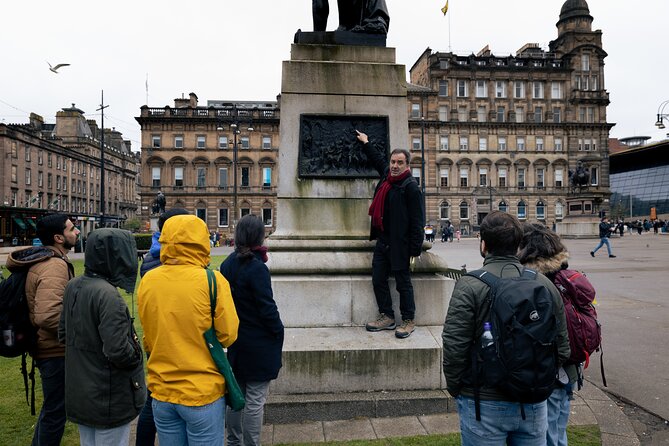
In George Square, the guide points out the Sir Walter Scott statue. The takeaway here is how Scott helped shape a modern idea of Scotland, not just as a romantic figure from a book, but as a person who influenced how Scotland was presented to the wider world.
Then you move to the Robert Burns statue, and this one has the kind of origin story that feels very Glasgow. The monument was tied to early crowdfunding, with thousands showing up for the unveiling. It’s also a fun reminder that national identity can be a public project, funded and celebrated by ordinary people.
If you want to understand why Glasgow has a strong voice and a strong opinions streak, these two stops help.
A different kind of day out in Scotland:
- Guided Celtic Park Stadium Tour
★ 5.0 · 3,136 reviews - Tennent’s Brewery Tours Ticket
★ 5.0 · 1,938 reviews - City Sightseeing Glasgow Hop-On Hop-Off Bus Tour
★ 4.5 · 1,873 reviews - Oban, Glencoe, Highlands Lochs & Castles Small Group Day Tour from Glasgow
★ 5.0 · 1,432 reviews
Merchant Power: Merchant’s House, Trades Hall, and the Money Behind the City
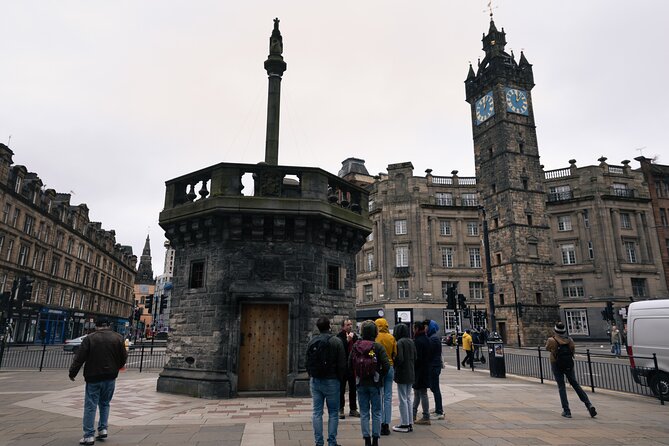
The walk continues with buildings connected to the people who built Glasgow’s prosperity. Merchant’s House offers a window into how the city’s merchant class saw itself, and why trade mattered so much here.
From there, you get to Trades Hall of Glasgow. This is where the story shifts from famous names to the everyday labor systems: carpenters, tanners, dyers, and other trades that supported the city’s growth. The tour frames Trades Hall as a place that looked after members who had become too old to work, which gives you a more human view of the old power structures.
These stops are ideal if you like when history includes economics and real lives, not only big wars and big kings.
Turning Private Wealth Into Public Culture: Gallery of Modern Art
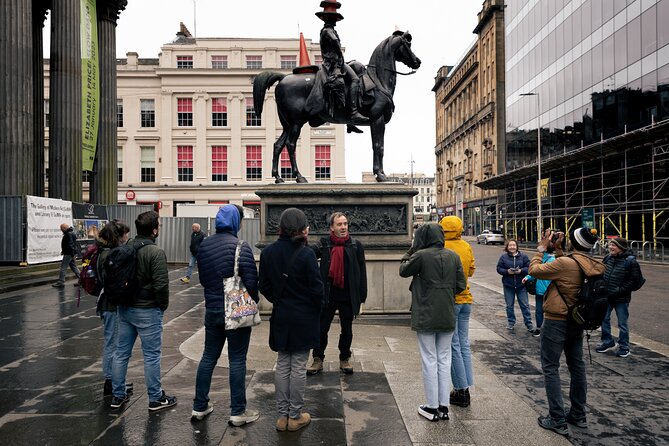
Next comes the Gallery of Modern Art. The key idea is simple and useful: the building began life as a private mansion and later shifted into multiple roles before becoming a gallery.
That matters because Glasgow’s cultural identity did not appear out of nowhere. It was made from older wealth, older buildings, and new uses. Even if modern art is not your thing, the change in the building’s purpose is the point, and the guide uses that angle to keep it interesting.
The Duke’s Cone, Then a Pizza Break That Adds Local Color
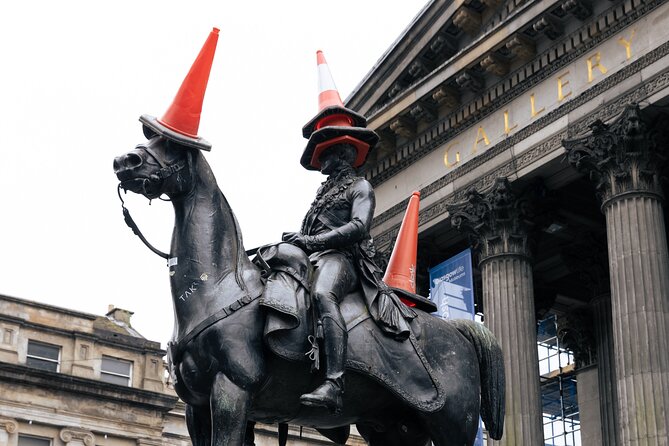
You’ll also pass the Duke of Wellington statue, which most people recognize for its slightly absurd detail: a traffic cone placed on the Duke’s head. It’s funny, but it also shows something real about cities. People don’t only revere history, they also mess with it, comment on it, and keep it alive.
Then comes Paesano Pizza, a popular Glasgow spot. This stop is short, almost like a wink, but the tour connects it to a specific story about a past job opportunity. Even if you skip food that day, it is a useful reminder that the city’s modern texture is layered on top of the old streets.
Medieval Streets, Clubs, and the Arts Center Stop You Might Actually Remember
The route weaves through old and newer uses of the same city blocks.
You’ll see the candle makers street area, originally set apart to reduce fire risk, then later a spot for markets and warehouses, and today part of Glasgow’s cultural district. That sequence is a great way to understand how risk, commerce, and culture keep reshaping the same ground.
You also visit The Corinthian Club, a building that previously served as a bank, courthouse, and county building before becoming a club and wedding venue. If you pay attention here, you’ll notice a theme: Glasgow reused structures as its needs shifted, rather than constantly starting over.
A later stop at Trongate 103 brings you to an arts center environment, including the Sharmanka Kinetic Gallery. This is the kind of stop that sticks because it makes the city feel present, not only historical.
Old Market Buildings and the High Street Loop That Matters
The tour includes City Halls & the Old Fruitmarket area. The Old Fruitmarket building still stands, even though it has shifted into retail use. The walk-through angle helps you imagine the prior bustle without needing a time machine.
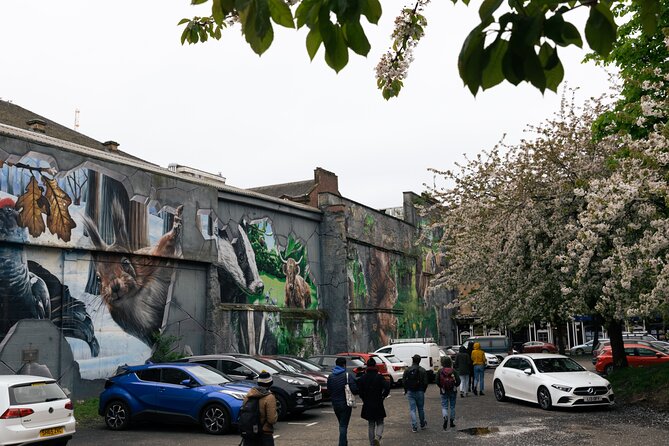
Then you spend time on High Street, described as the medieval heart of Glasgow. There are several attractions along the road, including the site of an old university tied to being among the oldest in Britain, plus murals related to St Mungo and other important buildings. This is one of the best segments if you like street-level stories and visible art you can keep noticing after the tour ends.
Britannia Panopticon Music Hall, Stan Laurel, and Glasgow’s Performance Side
One of the most distinctive stops is Britannia Panopticon Music Hall, presented as the world’s oldest surviving music hall. The tour even notes early performance connections with Stan Laurel, which gives you a surprising link between Glasgow’s entertainment tradition and a wider film legacy.
This works well because it breaks the pattern. So far, you’ve covered civic buildings, memorials, trade, and religion-themed sites. Music hall culture brings in leisure, performance, and the idea that Glasgow’s public life was never only about work and industry.
The Hospital Museum and Religion at the End of the Line
The tour also pauses at Friends Of Glasgow Royal Infirmary Museum, described as the oldest hospital in Glasgow and tied to medical innovations. Even with only a short stop, it helps round out the city picture, adding science and care to the mix.
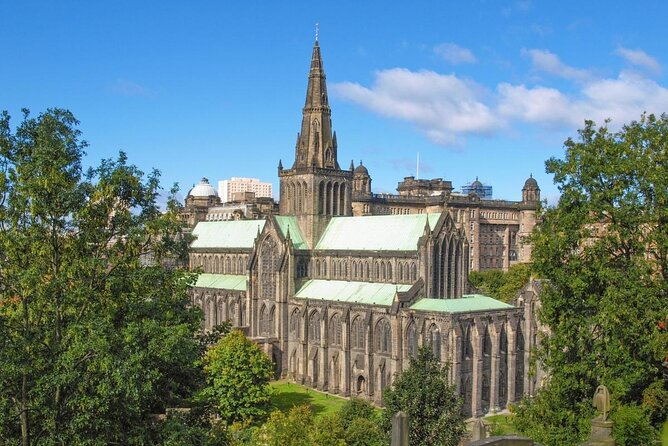
Finally, you end inside Glasgow Cathedral, described as the oldest building in Glasgow dating to the 13th century, with church presence on the site going back to the 6th century. After that, the tour continues to Provand’s Lordship and then St. Mungo Museum of Religious Life and Art.
This ending sequence is a strong close because it connects the sacred sites to the city’s identity. St Mungo is central to Glasgow’s story, and the museum format that follows that theme makes it easier to understand why faith and art, not just politics, shaped how people lived here.
Price and Logistics: Is $17.91 Worth It?
At $17.91 per person, this feels like good value for the kind of cross-section you get. The tour lists free admission at the stops, and it packs in a lot of central landmarks within a single route.
Time-wise, you should plan around about 2 hours and 45 minutes total. That fits the tour style, which is short stops plus talking while walking. If you want a slow museum pace, this might feel quick. But if you want a guided orientation that gives you leads for later, the pace is the point.
One more practical note: the tour is capped at 15 travelers, which generally keeps things manageable. Still, if you are sensitive to sound, keep yourself close to the front so you do not miss parts of the explanation.
Best Use of Your Time Before and After the Tour
To get the most out of the walk, treat it like a navigation tool plus a story primer.
Before you go, wear shoes made for sidewalks and cobblestones. The walking between attractions adds up, and it’s a good chunk of the total time. If weather looks rough, remember this experience is listed as requiring good weather. If it gets canceled for poor weather, you’re supposed to be offered another date or a full refund.
After the tour, do not rush away. Because it ends near Ingram Street and the Ramshorn area, it sets you up to keep exploring on foot. If you are trying to stack multiple tours in one day, give yourself a bit of breathing room to get settled.
A Quick Heads-Up on Access and Hearing
This is the one part I would prepare mentally for. Some departures can face local disruptions like construction and access limits. If a stop cannot be entered, you might get a look from outside or a shorter version of what you expected.
Also, while the group size is small, outdoor sound is unpredictable. If you know you lose speech easily in crowds, aim to stay nearer to the guide.
Should You Book This Glasgow History Walk?
I think you should book it if you want a practical intro to Glasgow that mixes architecture, civic symbols, trade power, faith, and a few playful local touches. It is ideal for first-timers who want a route they can build on, and it’s also great if you like guides who tell stories without overloading you.
Skip it or consider a different option if you need a quiet, slow, mostly indoor pace, or if you strongly prefer entering every site rather than doing quick exterior and short interior moments. Also, if point-to-point endings are hard for your schedule, you’ll want to plan how you’ll get back to your next stop.
If you do book, do one thing that pays off: after the last stop, pick one building or theme that hit you most and circle back later. This tour gives you the map, and your follow-up chooses what becomes the main story.
FAQ
Where does the tour start?
The tour starts at George House, 50 George Square, Glasgow G2 1EH, UK.
Where does the tour end?
The tour ends outside the Ramshorn Church on Ingram Street, around 98 Ingram St, Glasgow G1 1EX, UK.
How long is the tour?
It runs for approximately 2 hours and 45 minutes, with the activity listed as about 2 hours 4 minutes to 2 hours 14 minutes.
What is the price per person?
The price is $17.91 per person.
What language is the tour offered in?
The tour is offered in English.
Do I need an admission ticket for the stops?
The listed stops note free admission ticket access.
Is there a group size limit?
Yes, the maximum group size is 15 travelers.
Is a mobile ticket provided?
Yes, the tour includes a mobile ticket.
Does the tour run in any weather?
The experience requires good weather. If it is canceled due to poor weather, you’ll be offered a different date or a full refund.
Are service animals allowed?
Yes, service animals are allowed.
Newest reviews from Glasgow
- West of Scotland Cultural Tour★ 5.0 · 7 reviews
- Private Tour of Glasgow Distilleries and a Loch Lomond Cruise★ 5.0 · 13 reviews
- Tour of Glasgow (4 hours)★ 3.5 · 5 reviews
- Ultimate Day tour Edinburgh: Glencoe, Highland Cows, Loch Lomond★ 5.0 · 10 reviews
- Scottish Highlands, Lochs & Castles from Edinburgh and Glasgow★ 5.0 · 6 reviews
- The Ghost of Mary Queen of Scots Escape Room★ 5.0 · 24 reviews
- The Braveheart tour from Glasgow or Edinburgh★ 5.0 · 6 reviews
- The Celtic Experience – Private 1 day tour★ 5.0 · 9 reviews
Historical Tours, compared.
Old Town Walking Tour History and Tales in Edinburgh
Read our review →

Multi-Sensory Small-Group Historic Vaults Tour in Edinburgh
Read our review →
Edinburgh Old Town: Historical Guided Walking Tour
Read our review →


Browse the lists this tour appears in