
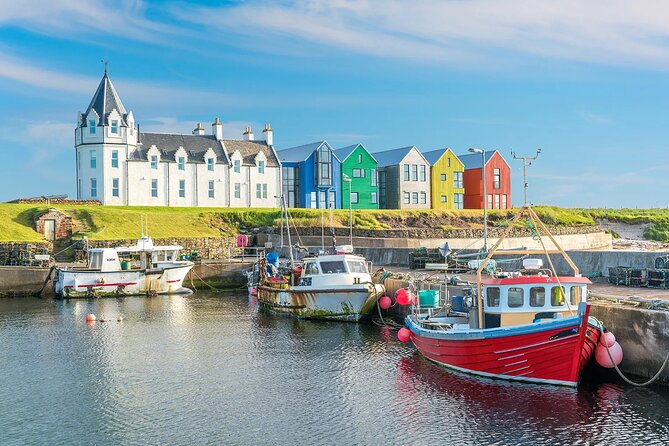
Reviewed · SCOTTISH HIGHLANDS TOURS
Top Of The Highlands Tour: John O’ Groats, Caithness and More
The far north hits different. This private day trip pushes you to the northern edge of mainland Scotland for dramatic North Sea scenery, wildlife spotting, and a coast-hopping route that feels worlds away from big-city travel. With local guide Tony driving and narrating, the day runs on a tight, thoughtful rhythm, yet still leaves room to adjust to what your group cares about.
I especially love two things here: first, the private format for up to 4 people, which makes it easier to pause for photos, ask questions, and move at your group’s pace. Second, the stops are chosen for real visual payoff, from the John O’Groats signpost area to the towering Duncansby Stacks and the steep viewpoints over the Pentland Firth. It is not a museum day, it is a “look at that” day.
One consideration: two big ticket items, castle admissions (Dunrobin and/or Castle of Mey), plus lunch, are not included. The scenery is free, but you will want a budget cushion for those optional charges.
In This Review
- Key moments worth marking on your map
- When a private day trip beats renting a car
- Kicking off at John O’Groats, the photo and the real coast
- Duncansby Stacks, where the cliffs do the talking
- Duncansby Head views and the lighthouse heritage
- Wick in Caithness, maritime past plus whisky energy
- Whaligoe Steps, old fishing access with a wow-factor view
- Dunnet Head, the top of UK mainland views
- Dunrobin Castle and Gardens, a stately finish when routing allows
- Castle of Mey, royal connections with Pentland Firth views
- What the included stuff means for your comfort
- Value check: price, what you get, and what to budget
- Who this tour suits best
- Should you book Top Of The Highlands Tour: John O’Groats, Caithness and More?
- FAQ
- How long is the Top Of The Highlands Tour?
- Where does the tour start?
- How much does the tour cost?
- What is included in the price?
- What is not included?
- Is Dunrobin Castle always part of the itinerary?
- When is Castle of Mey visited?
- What should I expect for tickets?
- What is the cancellation policy?
Key moments worth marking on your map
- John O’Groats photo stop at Britain’s northern mainland edge
Get your bearings, then enjoy the coastline views over the Pentland Firth toward Orkney.
- Duncansby Stacks and the birdlife show
The walk and viewpoint make it easy to spot seabirds like puffins when conditions cooperate.
- Duncansby Head lighthouse landmark views
Even without interior access, the white tower in a wild seascape is the point.
- Wick’s working harbour past and whisky stop energy
You get maritime heritage in a town that still feels connected to the sea.
- Whaligoe Steps, a staircase into old fishing life
The steep descent is optional, and the viewpoints above still deliver.
- Dunnet Head lighthouse area, with Orkney possible on clear days
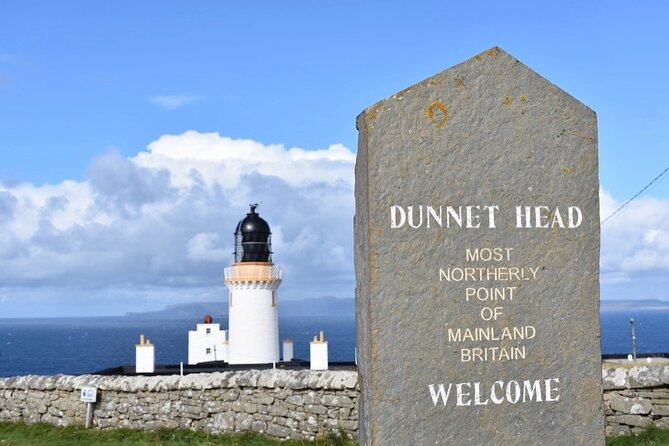
You get official bragging rights for being at the very top of UK mainland.
When a private day trip beats renting a car
This is built for people who want the far north without turning the day into a self-directed logistics puzzle. You ride in an air-conditioned vehicle, with bottled water, snacks, and an umbrella included, so you are not hunting for essentials while you are trying to enjoy the coast. And because it is a private tour, your guide is not juggling a busload of strangers, so the experience feels more personal.
That matters a lot in this region. Roads move through open moorland and along rugged coastline where weather changes fast. Your timing only works if someone who knows the area is watching conditions and choosing the right moments to stop. In the strong reviews for this tour, one theme is clear: Tony makes the drive feel shorter with smart, steady commentary, and he can customize when your group wants extra time at a viewpoint or wants more context about what you are seeing.
Now, about duration. Expect roughly 7 to 11 hours depending on the exact routing and which optional castle stop days fit. That is a long day, but it is also exactly what you need to cover this many far-north highlights without rushing between them in a rental car.
More Highlands Tours in Inverness
- Inverness: Loch Ness & The Highlands
★ 5.0 · 301 reviews - Inverness: 2-Day Isle of Skye, The Fairy Pools & Highland Castles
★ 5.0 · 225 reviews - Inverness Highlands Bucket List Tour
★ 5.0 · 111 reviews
Kicking off at John O’Groats, the photo and the real coast
John O’Groats is one of those places that lives on road-trip posters, then surprises you when you stand there in real weather and real wind. It sits at the north-eastern tip of Scotland and is often framed as the northern mainland end of the Land’s End to John O’Groats route. Even if you are not doing the full journey, the area’s meaning is right in front of you.
The walkable core is small, but the views are huge. Expect rugged coastal cliffs and sea stacks, plus dramatic sights across the Pentland Firth toward the Orkney Islands. This is also where you will commonly get that classic signpost photo. I like this stop for two reasons: it is quick to access, and it gives you instant context for the day. After John O’Groats, you can actually understand why the next points on the route matter.
Wildlife is part of the fun, too, but keep expectations flexible. Puffins, seals, and even whales have been seen here at times, depending on season and conditions. You might get lucky, or you might just get the kind of coastline that makes you forget to check your watch.
One gentle drawback: because it is a famous photo spot, it can feel busy in peak seasons, and that can cut into your calm time. The upside is that the rest of the route usually feels less crowded.
Duncansby Stacks, where the cliffs do the talking
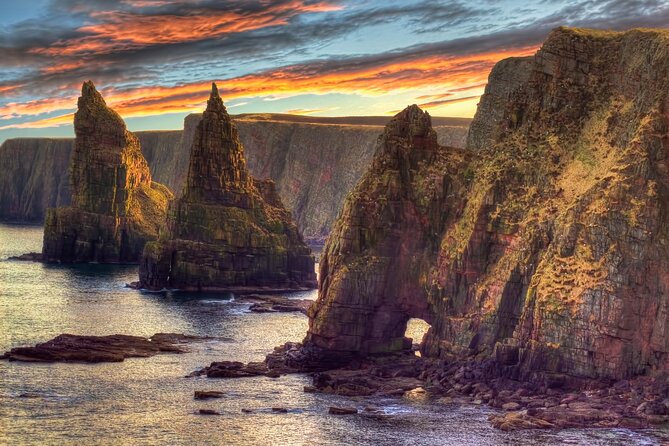
Right near John O’Groats, Duncansby Stacks offer the kind of scenery that makes you understand why coastal Scotland is so famous. These are huge sea stacks rising dramatically from the North Sea, shaped over centuries by wind and waves. Even a short walk gives you changing angles, and the viewpoints do most of the work for your camera.
What you should look for is scale. Two of the biggest stacks have pointed, almost triangular shapes, which makes them feel otherworldly against the sky and sea. If you ever get a sunrise or late-afternoon light on your timing, it is especially striking, but even in ordinary daylight it looks dramatic.
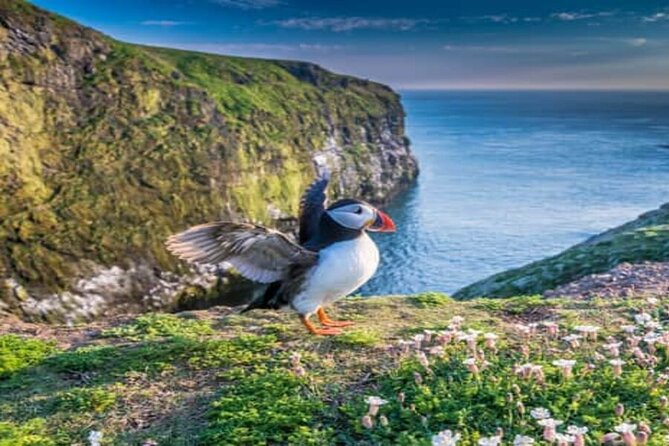
Birdlife is a major part of the experience here. Expect seabirds around the cliff edges, with species like puffins, guillemots, and kittiwakes commonly linked with the area. Of course, wildlife is never guaranteed, but this is one of the most promising stops for birdwatching on this itinerary.
The time here is about 30 minutes. That is enough to get your bearings, walk to a good viewpoint, and move on before your legs cool off too much. If your group includes someone who wants to linger, you should ask your guide for a slightly adjusted pace. The private setup makes that sort of tweak realistic.
Duncansby Head views and the lighthouse heritage
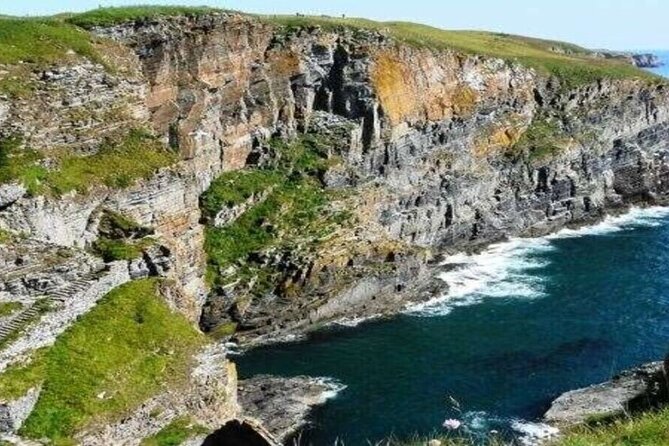
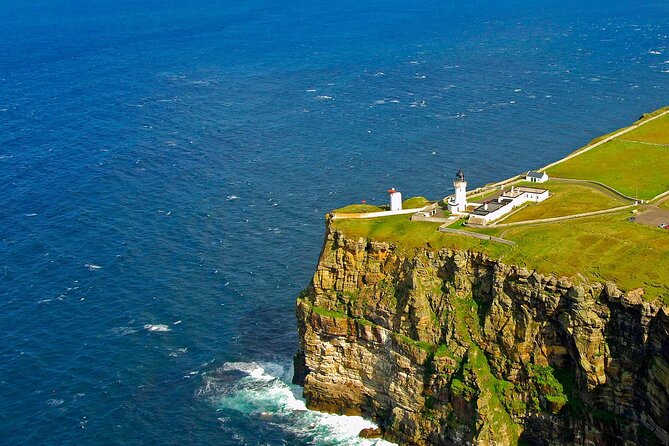
Duncansby Head is the next character in the coastal story. This is where you get a famous lighthouse built in 1924 by David Alan Stevenson from the Stevenson lighthouse-engineering family. The lighthouse itself is not open to the public, but the real value is the view, and the fact that the area has guided sailors through rough water for generations.
The ride into Duncansby Head is part of the point. You travel through open moorland, then the coast reveals itself in a sudden, dramatic way. Once you get there, you can appreciate the rugged cliffs and the North Sea’s mood at close range. It is a quick stop, but it lands.
Wildlife can show up again: seabirds like puffins and others are associated with the nesting cliffs, and birdwatchers often focus on the edges of the cliffs where activity is highest.
Time is tight here at about 20 minutes, so bring your walking shoes just in case you want an extra angle. This stop works best if you are the type who enjoys maritime history without needing a ticket or an interior visit.
A different kind of day out in Scotland:
- Loch Ness Cruise, Outlander & Urquhart Castle Tour from Inverness
★ 5.0 · 1,384 reviews - Loch Ness and Caledonian Canal 2-Hour Cruise from Dochgarroch
★ 4.5 · 1,158 reviews - The Ultimate Isle of Skye Day Tour from Inverness
★ 5.0 · 1,135 reviews - Loch Ness 1-Hour Cruise with Urquhart Castle Views
★ 4.5 · 1,102 reviews
Wick in Caithness, maritime past plus whisky energy
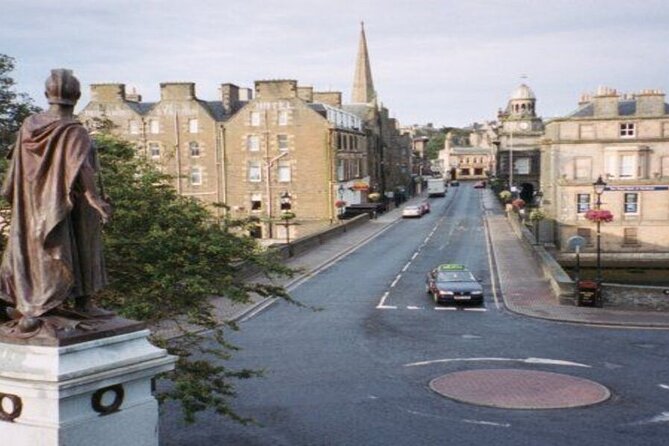
Wick gives you a different kind of texture than the cliff stops. This former Viking settlement sits in Caithness and carries a strong maritime identity. In the 19th century, Wick was one of Europe’s busiest herring fishing ports, and you can still feel that legacy around the harbour.
Even if you only have about an hour, it is a worthwhile break in the day. The town offers a mix of history, coastal scenery, and practical interest points that keep you grounded. You might spot reminders of the harbour’s former role, which is a nice contrast to the huge open viewpoints you had earlier.
Wick also has some fun details that make it feel less like a stop sign and more like a real town. It is home to the Old Pulteney Whisky Distillery, and Wick is known for the Guinness world record for having the shortest street in the world. If your group enjoys odd local facts, this is a great moment to do that type of light sightseeing without trying too hard.
Because this is a private tour, you can also use this hour to reset. Grab a quick snack, use a restroom if needed, and then head back out to the wilder coastline.
Whaligoe Steps, old fishing access with a wow-factor view
Whaligoe Steps are a classic “how did they build this” stop. The Steps are stone stairs, around 365 steps, descending from the cliff edge down to a historic harbour. That huge number is not just a detail, it is the whole feel of the place. You can see the staircase from above even if you do not want to descend, and the views from the cliff still deliver.
These stairs were built in the 17th to 18th century to access a small fishing port. The story tied to the Steps is that local women hauled heavy baskets of herring up and down the stairway. Standing near the top, it is hard not to imagine the effort, the wind, and the daily grind that shaped the coastline life here.
Expect rugged cliffs and deep North Sea character. Seabirds show up, and seals are a common draw when conditions allow. Whales and dolphins have also been spotted at times, but again, this is nature, not a timed show.
At about 45 minutes, you have enough time for either:
- a scenic overlook plan, or
- a more active plan if your group wants to descend partially or fully
If someone in your group has mobility limits, the “view from above” option is exactly what makes this stop work for more people than the average stairs-and-steps attraction.
Dunnet Head, the top of UK mainland views
Dunnet Head is where the day shifts into big, open “edge of the world” energy. This northern headland is in Caithness and is often framed as the northernmost point of mainland Britain. You also get the Dunnet Head Lighthouse, built in 1831 by Robert Stevenson.
If the weather is clear, you may even see toward the Orkney Islands. That possibility adds payoff to the stop, especially after you have already been looking out toward Orkney from earlier points. Even without that extra visibility, the cliffs and sea views make the “very top” feeling real.
Wildlife is part of why people linger. The area’s cliffs are nesting habitat for seabirds including puffins, razorbills, guillemots, and kittiwakes. Birdwatching here can be surprisingly productive when you have a quiet moment to scan the cliff edges.
The time here is short, around 20 minutes. In a long day, that is actually smart because it gives you a final high-impact view without exhausting everyone. It also sets you up for the last cultural stop.
Dunrobin Castle and Gardens, a stately finish when routing allows
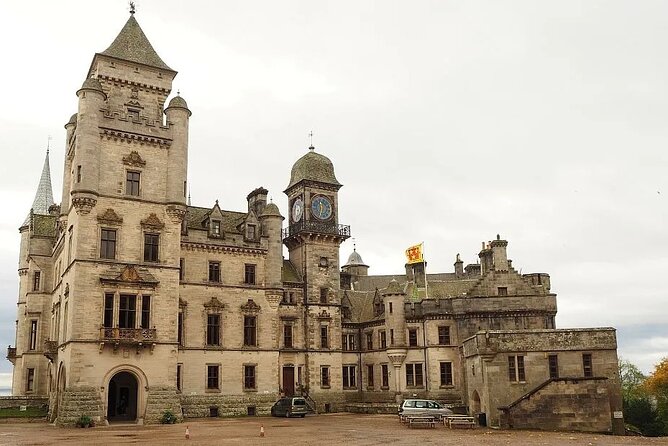
This stop is optional depending on your tour’s departure point from Inverness. When it is in the schedule, Dunrobin Castle is a stately home in Sutherland and the family seat of the Earl of Sutherland and Chief of Clan Sutherland.
What makes this one worth your time is the interior museum feel and the strong Victorian-Edwardian presentation. You will also see:
- a museum display of trophy heads taken by family members on safari
- ethnographic items from around the world
- archaeological artefacts
- the setting in an 18th-century summerhouse adjoining the formal gardens
This is the most “ticketed” part of the day. Admission is not included, so you should expect an extra cost if this stop is running. Your guide will only take the group here when the tour departs from Inverness, so if you are planning around specific ticketed sites, this is the key detail to confirm when you book.
The biggest tradeoff is that you trade time outside for time inside. In a day focused on coastline, that can feel like a curveball, but it also gives your brain a break from wind and cold air, plus it adds a slice of local power and heritage.
Castle of Mey, royal connections with Pentland Firth views
Another optional stop, Castle of Mey is visited when the tour departs from Scrabster, typically May to September, Wednesday through Sundays. When it is available, it is one of the more interesting ways to end a far-north tour because it mixes royal story with real sea-coast atmosphere.
The castle itself dates to the 16th century and was saved from ruin through restoration by Queen Elizabeth, The Queen Mother, in 1952. She used it as her holiday retreat for nearly 50 years. Today, you get a sense of that royal rhythm, with charming interiors and gardens looking out over the wild waters of the Pentland Firth.
Admission is not included, and lunch is also not included, so this stop can push your spending a bit. Still, if your group likes royal connections, gardens, or a calm finale after a day of cliffs, this is often the stop that makes the day feel more complete.
If Castle of Mey is not operating on your tour day, the itinerary includes a replacement stop on closed days. That flexibility is useful when you want the day to stay full even if a site is unavailable.
What the included stuff means for your comfort
It is easy to skim the “included” list, so here is what it actually does for your day in practice.
- Air-conditioned vehicle matters in the far north because long drives can get exhausting, and you want to reset between sea stops.
- Bottled water and snacks keep you from losing time to grocery hunts or skipping meals.
- Umbrellas are a surprisingly big deal. This coast can be wet even when the weather looks fine from far away.
- Local guide means you are not just looking at places, you are learning how people read this coast, how the towns connect, and why these landmarks earned their reputation.
In the best feedback, the comfort and the driving skill keep showing up. The private vehicle and professional handling make the hours feel less punishing, and Tony’s style helps you appreciate the region instead of just collecting photos.
Value check: price, what you get, and what to budget
The price is $1,018.25 per group for up to 4 people, with a private vehicle and a local guide included. That can feel steep until you break it down into what you would otherwise pay for on your own: transport across long distances, guided storytelling, and the convenience of not planning each stop in advance.
You still need to budget for:
- Castle admissions, listed at £15 to £17
- Lunch, which is not included
If your group has 3 or 4 people, the per-person cost often starts to feel more reasonable because you split the private vehicle and guide cost. If you are traveling solo or as a couple, the experience can still be worth it if you truly want a guided, efficient day and not the effort of self-driving.
Either way, the best use of your money is to plan for the paid stops and then treat the rest of the day as a high-value “free scenery” bonus.
Who this tour suits best
This tour is a strong match if you want:
- a private day that hits the far-north highlights efficiently
- lots of outdoor viewing, with stops that offer real angles and easy photo moments
- a guide who can explain what you are seeing along the way
It may not be ideal if your idea of a great day requires long museum time, because much of it is designed for coastline views, quick stops, and short drives between them.
It also suits mixed groups well because several stops can be enjoyed from viewpoints, not just from active climbing.
Should you book Top Of The Highlands Tour: John O’Groats, Caithness and More?
I think you should book if your priority is seeing the far north without the hassle. The route hits the big-name coastline points, then adds texture with Wick and a distinctive stop like Whaligoe Steps. The private format helps a lot, especially with Tony’s calm, organized style and his ability to tailor the day to your interests.
Skip it or rethink it if your budget cannot stretch for castle admissions and lunch. Also, if you dislike long drives in a day, you might find 7 to 11 hours a grind even with snacks and water.
If you like dramatic coastal scenery, seabird watching when conditions line up, and a local guide who makes the region feel human, this tour is a smart way to spend a day up north.
FAQ
How long is the Top Of The Highlands Tour?
It typically runs about 7 to 11 hours, depending on the specific routing that day.
Where does the tour start?
The tour is based out of Inverness, Scotland, with a pickup option. The tour begins at 9:00 am.
How much does the tour cost?
The price is listed as $1,018.25 per group, up to 4 people.
What is included in the price?
Included items are bottled water, snacks, an air-conditioned vehicle, private transportation, a local guide, and umbrellas. Most stops have admission ticket marked as free, but not all optional attractions are included.
What is not included?
Castle admissions are not included (listed as £15 to £17), and lunch is also not included.
Is Dunrobin Castle always part of the itinerary?
No. Dunrobin Castle is only visited when the tour departs from Inverness.
When is Castle of Mey visited?
Castle of Mey is only visited when the tour departs from Scrabster, and it operates May to September, Wednesday to Sundays. A replacement stop is added on closed days.
What should I expect for tickets?
Most scenic stops are listed with admission ticket free. The castle stops require paying admission separately.
What is the cancellation policy?
You can cancel for free up to 24 hours in advance for a full refund. If you cancel less than 24 hours before the start time, the amount paid will not be refunded.
Newest reviews from Inverness
- 2-Hour Private Celtic Handfasting Ceremony Experience★ 5.0 · 18 reviews
- Private Scottish Highlands Full-Day Tour with Pickup★ 5.0 · 8 reviews
- Private Highland Whisky Tour including 10+ Single Malt Tastings★ 5.0 · 22 reviews
- Create Your Own Special 2 Day Tour★ 5.0 · 12 reviews
- Fort William and Glencoe★ 5.0 · 12 reviews
- Private Speyside Whisky Tour including 10+ Single Malt Tastings★ 5.0 · 80 reviews
- BMW SUV Tour of the Scottish Highlands with Kilted Guide★ 5.0 · 5 reviews
- The Malt Room Whisky Gigs★ 5.0 · 40 reviews
Scottish Highlands Tours, compared.
Loch Ness, Glencoe & the Scottish Highlands Tour
Read our review →
Loch Ness, Glencoe & Scottish Highlands Tour
Read our review →

Loch Ness, Scottish Highlands, Glencoe and Pitlochry Tour
Read our review →
Loch Ness & Highlands Small-Group Tour from Edinburgh with Cruise
Read our review →
1 Day Loch Ness, Glen Coe & the Scottish Highlands from Edinburgh
Read our review →
Browse the lists this tour appears in